Source Portable Travel Makeup Brush Set for Face, Cheek, Eye
Explore 30 options for a portable travel makeup brush set designed for face, cheek, and eye application. Compare synthetic hair and nylon bristles with plastic or wood handles. These sets feature OEM customization and various color options to meet your sourcing needs.
Key considerations
Products List










Comprehensive Sourcing Guide
Portable Travel Makeup Brush Set Sourcing Guide
Sourcing a portable travel makeup brush set for resale or private-label distribution requires balancing compact product dimensions, brush count, and customization capability. The listings observed in this category span single-purpose tools to multi-piece kits, with set sizes ranging from 2-piece and 5-piece configurations up to 8-piece and 10-piece assortments. Packaged weights cluster between roughly 51g and 60g, which matters for shipping-cost modeling and for retail packaging claims. Most listings originate from China, and nearly all advertise OEM or ODM support, meaning the category is well suited to branded programs rather than generic resale.
Because the category is crowded, buyers should treat each listing's attributes as observations to verify rather than guarantees. Brush material, handle material, color options, and packaging format vary significantly between models even within the same supplier's catalog. This guide walks through the decisions that determine whether a quoted set will perform in your market: specification confirmation, documentation, commercial terms, factory qualification, and the longer-term checks that protect repeat orders.
Product Scope and Observed Listing Signals
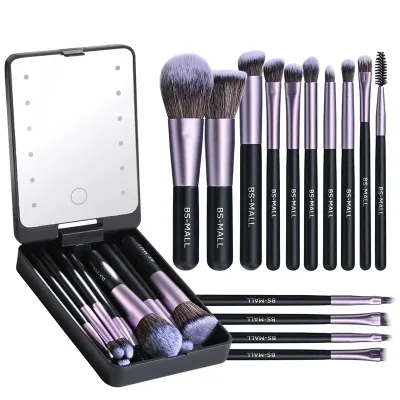
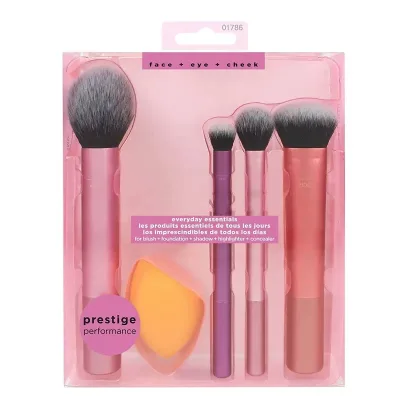
The observed listings cover three practical use categories: face, cheek, and eye application. Some sets are marketed as general face kits, while others specialize — one listing describes an assortment of angled, tapered, smudge, and flat brushes aimed at eye work, and another highlights cheek use with an angled or tapered head. Buyers should map each candidate set against their target customer: a travel kit for general consumers typically needs a powder, blush, and blending tool mix, while an eye-focused set can be smaller and lighter. Set counts of 5, 6, 8, and 10 pieces appear in the data, so positioning is a real differentiator.
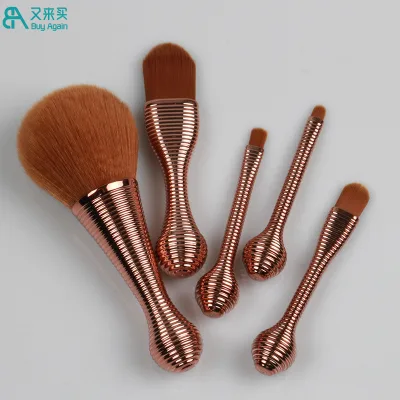
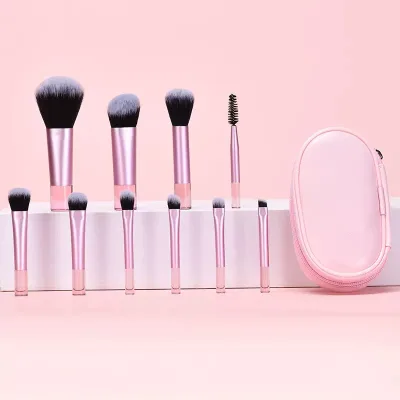
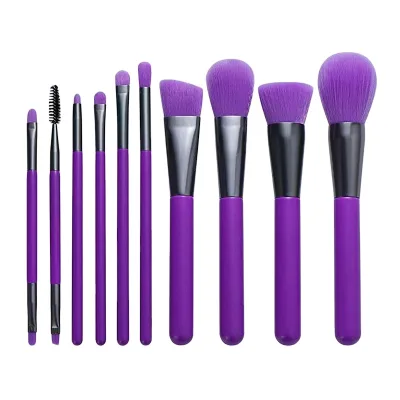
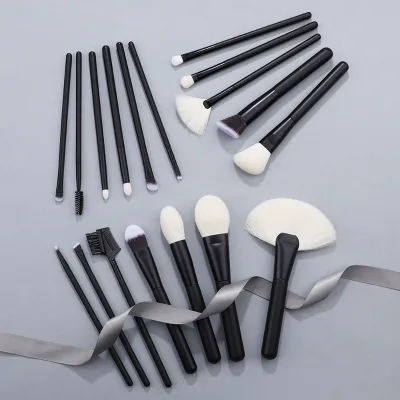
Visual and packaging signals also differ meaningfully. Color options include rose gold coffee brown, green, pink, black, purple, white, blue, and pink gradient finishes, giving retailers room to align with seasonal palettes. Handle materials include both plastic and wood, and one listing emphasizes eco-friendly material with a soft and dense brush feel. Packing formats range from boxed sets to OPP bags to simple polybags, which affects both perceived retail value and unit cost. Confirm which packing format the quoted price actually includes.
Technical Specifications to Verify
Dimensional data is the first specification to lock down. Observed product standards range from compact formats such as 143cm and 14.43.2cm for individual sets, to 911.5cm and 1408927mm boxed dimensions, up to 28103*103mm for a larger kit. These numbers drive two decisions: whether the set genuinely qualifies as "portable" for your customer's use case, and what the volumetric shipping weight will be. Request actual measurements of brush length, handle diameter, and closed-case dimensions, and confirm tolerances rather than relying on catalog figures alone.
Material composition should be verified at the component level. Observed brush materials include synthetic hair and nylon, both of which are standard for travel sets because they dry quickly and tolerate handling, but fiber density, softness, and shedding behavior vary widely between grades. Handle materials span plastic and wood; wood adds weight and requires finishing quality checks. Also verify total set weight — observed values run from 51g to 60g — and confirm whether that figure includes packaging. Ask for a physical sample before committing to any order volume.
Compliance and Safety Documentation
Cosmetic-contact tools are subject to market-specific safety expectations even though the brush itself is not a cosmetic formulation. Buyers exporting to the United States or European Union should confirm which regulations apply to synthetic fiber and plastic components that touch skin, including restrictions on certain colorants and plasticizers. Do not assume a listing's claims satisfy these requirements; ask the supplier for the underlying test documentation rather than accepting a certification logo in a product image. If wooden handles are involved, finishing and coating safety should be part of the same inquiry.
Beyond material compliance, verify labeling and claims discipline. OEM and ODM arrangements mean your brand name will appear on the product or packaging, which transfers labeling responsibility to you as the importer. Confirm country-of-origin marking (observed origin is China), ingredient-adjacent claims such as "eco-friendly material," and any softness or density claims you repeat in your own marketing. Request material safety data or composition declarations for the fiber and handle polymers, and keep these documents on file for each production run so future reorders can be traced to the same inputs.
Cost Drivers and Commercial Terms
Observed listing prices span roughly $0.30 to $11.50, and MOQs range from as low as 2 pieces to 5,000 pieces — an enormous spread that reflects the difference between sample-scale listings and bulk production offers. The main cost drivers are brush count per set, fiber grade, handle material, packing format, and customization depth. A 10-piece set in a printed box with a private logo will not price like a 2-piece OPP-bagged kit, so compare quotes only after normalizing these variables. Ask suppliers to break out tooling or logo-printing charges separately from unit price.
Commercial terms to clarify before ordering include the exact MOQ at your chosen customization level, since logo printing often carries a higher minimum than blank goods; packing specification in writing, including box versus bag and any inserts; and payment structure. Because observed packing formats vary from simple bags to boxed retail-ready sets, confirm who supplies retail packaging — the factory or a third party — and at what cost. Request a pro forma invoice that itemizes unit price, packaging, customization, and freight basis so later discrepancies have a written reference.
Supplier Qualification and Quality Control
Qualify suppliers by examining their category depth rather than single-listing appeal. The observed catalog includes multiple model numbers (such as 0026-2, 0027, 0016, 004-2, 006-2, ST7416, ST7590, and ST9018) with distinct specifications, which suggests established production tooling. Ask how long each model has been in production, whether molds and brushing lines are in-house or outsourced, and which models can accept your logo without new tooling. A supplier who manufactures several set configurations is more likely to maintain consistent fiber sourcing and assembly quality across reorder cycles.
Quality control should be specified in writing, not assumed. For brush sets, the highest-risk defects are fiber shedding, ferrule separation from the handle, uneven trimming, and color variation across sets. Define an acceptable quality limit for these defects, request pre-shipment inspection of a statistically meaningful sample, and require the golden sample to be signed and retained by both parties before mass production. For custom colors such as rose gold coffee brown or pink gradient, approve a physical color standard, since gradient finishes are especially prone to batch-to-batch drift.
Long-Term Procurement Checks
Sustained value in this category comes from consistency across reorders, not from the first shipment. Establish a practice of comparing each incoming batch against the retained golden sample for weight (observed sets run 51–60g), dimensions (e.g., 14*3cm class formats), and brush performance. Track defect rates by model number so you can shift volume toward the configurations that consistently pass inspection. If your brand relies on a specific colorway or handle finish, confirm annually that the supplier's material sources have not changed, since fiber and coating substitutions are common cost-saving moves that buyers notice only at retail.
Also revisit commercial terms as volumes grow. Suppliers who initially offered low MOQs for trial orders — observed minimums go as low as 2 pieces — typically expect volume commitments in exchange for improved pricing or customization depth at the 5,000-piece end of the observed range. Renegotiate packing upgrades, such as moving from bag to box packaging, once sales data justifies it. Finally, maintain a documented second-source option for your best-selling set configuration so a single factory's capacity or quality problem does not interrupt your assortment.
FAQs
What materials are used for the brush heads?
The brush heads are made from synthetic hair or nylon materials. These options provide soft and dense bristles suitable for face and eye application. The synthetic nature ensures durability and ease of cleaning, making them ideal for travel use without shedding or irritating the skin during daily routines.
How many brushes are included in a standard set?
Sets typically contain five, six, eight, or ten brushes per package. The exact count depends on the specific model code, such as 0026-2 or ST7416. Buyers can choose configurations that match their travel needs, with packaging options including boxed sets or individual OPP bags for convenient storage and transport.
Can I customize the logo on the brush handles?
Yes, OEM and ODM customization is available for most models. Buyers can request private logos on the plastic or wooden handles. This service allows brands to create unique portable travel makeup brush sets with their own branding, ensuring distinct product identity while maintaining the standard quality and specifications of the base design.
What are the typical dimensions of these brush sets?
Standard dimensions vary by model, ranging from 9x11.5cm to 14.4x3.2cm for individual brushes. Larger packaging or set boxes may measure up to 28x103x103mm. These compact sizes are designed for portability, ensuring the brushes fit easily into travel bags while providing sufficient length for comfortable handling and precise makeup application.
Are these brushes suitable for cheek and eye application?
Yes, the sets include brushes designed for face, cheek, and eye use. Specific models feature angled, tapered, or smudge brush styles to target different areas. The synthetic bristles are soft and dense, allowing for smooth blending and precise application on various facial zones, making them versatile tools for a complete travel makeup routine.
What packaging options are available for bulk orders?
Packaging options include boxed sets, individual OPP bags, or bag packaging. Models like 0026-2 come in boxes, while ST7416 uses OPP bags. These choices protect the brushes during shipping and storage. Buyers can select packaging that aligns with their retail strategy or logistical requirements, ensuring the products arrive in good condition for end consumers.